Thursday, August 30, 2007

Virginia Tech massacre and Laura Schlessinger

photos


Laura Schlessinger is a bi-weekly columnist for the Santa Barbara News-Press. In her April 19, 2007 column she gave advice on how to make schools safe from future random massacres. She states as a proud mother of a deployed "American paratrooper" perhaps she has a unique perspective on the massacre at Virginia Tech.

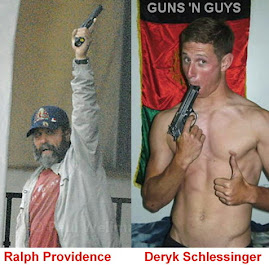
Unlike the recent report of the Virginia Tech Review Panel, Schlessinger didn't mention early detection or communicating mental health alarms. (Her Ph.D. is in physiology, not in the behavior sciences, as she performs on radio) She has not practiced physiology for a near 40 years, perhaps this explains her focus on guns in school and linking this to radical Islamists and jihadists? Coincidentally, her son Deryk(KingOf*Hearts*) Schlessinger, like Seung Hui Cho, both had disgusting, terrifying My Space pages. Deryk's alleged My Space, where he shared photos with friends ,(who post some of the same shots).

After several months of Army investigation into a possible court martial, there has been no further comment from the Army and no follow up on this news. Why did the Pentagon immediately cleanse all evidence of the MySpace pages, including whatever copies and cached versions were kept by Google and the Internet Archive? Most of all after the immediate statements by Army spokesman Robert Tallman. He said "it may be possible that our enemies are actually behind this." and "Our enemies are adaptive, technologically sophisticated, and truly understand the importance of the information battlespace." The Pentagon would immediately cleanse evidence against "our enemies"? The Santa Barbara News-Press did a complete blackout on this story, no one is attempting to publically support Deryk during this time. About all we can find, is to say "American paratrooper" is another embellishment. It would be more accurate for her to show pride in saying American Novice Parachutist, infantry, gunner or sniper

[click images to enlarge]

The Virginia Tech Review reveals Seung Hui Cho, had been mentally ill since childhood. The Review Panel analysed a variety of separate and related issues in the events leading up to the mass shootings and the aftermath. The panel conducted over 200 interviews and reviewed thousands of records to form its major findings.

“Warning students, faculty and staff might have made a difference,” it says.


Deryk Schlessinger
SLT "likely slander"?

"No this blog isn't about me, it's to thank you America, bc of your unwillingness to compromise and pull your head cut of your *ss every unit deployed to either Iraq or Afghanistan will serve a mandatory 15 months in country bc we have lost funding." KingOf*Hearts* 5/15/07

Help scarce for mental scars of war

Extremely alarming are the child murder, porn and rape cartoons.
No one
has been given an explanation.


In the Cho situation, his writing was a red flag that was missed.

Tuesday, August 28, 2007

GET RICH OR DIE TRYING


Struggling to meet enlistment rates and secure troop levels for the twin American debacles in Iraq and Afghanistan, U.S. Army recruiters have upped the ante for patriots and poor people alike in a scheme offering new recruits a $20,000 bonus for a quick departure. Uncle Sam is using this "quick-ship bonus" as a way to meet quotas for the country's "volunteer" military at a time when American casualties are surging. The new scheme allowed quotas to be met in July, but experts warn that recruiters are banking too much on troop quantity over troop quality. Are the lives of poor Americans really only worth $20,000?


Sunday, August 12, 2007

UK officer calls for US special forces to quit Afghan hotspot

August 12, 2007

"Sir,
Recently I read an article(Im having difficulty finding it again to post) about a change in mindset in US Special Forces while Rumsfeld was the boss. The gist of the article was that during Rumsfeld's tenure as Sec Def Special Forces started to place emphasis on the direct action role to the detriment of their other traditional roles. Could this be a result of that change? The comment made by one British Officer that, "sensitivity is not their strong suit" is especially disturbing. As Special Forces sensitivity should be exactly their strong suit." HKDan

UK officer calls for US special forces to quit Afghan hotspot
High civilian toll as teams rely on air strikes to provide cover
Declan Walsh in Islamabad and Richard Norton-Taylor
Friday August 10, 2007

Twelve-man teams of US special forces had been criticised for relying on air strikes for cover when they believed they were confronted by large groups of Taliban fighters and their supporters.

British officers say US special forces are cavalier in their approach
to the civilian population. The tensions were illustrated by an
incident the Guardian witnessed in Sangin earlier this summer.

A British patrol was abandoned by its American special forces escort
in the town for several hours. Stranded in central Sangin, British
officers tried to establish radio contact with the Americans, who had
disappeared without warning, and swore impatiently when they could
not.

The British criticisms intensified after the Americans led them to
their proposed site for a new Afghan patrol base in the town - beside
a graveyard and a religious shrine. "Sensitivity is not their strong
suit," said one British officer.

Most British soldiers work well with regular American troops and some
speak admiringly of them. But US special forces units are a different
matter.

They operate under a different chain of command, with their own rules
on everything from dress code to the use of weapons. Whereas the
British troops operate under Nato command, the American special forces
are commanded from the US-led coalition in Bagram airbase outside
Kabul. That means the Americans can call on a wider range of
airstrikes, and also that British officers have little control over
which munitions are dropped in populated areas. .

EXCERPTS:
"The American troops’ training, in contrast, seemed ad hoc, usually carried out by each unit on its own, rather than by a dedicated training staff. And it involved very few civilians, despite the crucial humanitarian and political aspects of the mission here." SARAH CHAYES

"I was trained and trained well to sacrifice myself to war and I was also training others to make the same sacrifice. But what is it all for? Money for the power elite? A chance to prove my manhood? No, in the end all you get if you kill someone is a dead human being, or you are dead. That is all there is. There is no glory. There is no honor." Sgt. Kevin Benderman

My Space: *"Yes . . . F---ING Yes!!!" said one blog entry on the Schlessinger site. "I LOVE MY JOB, it takes
everything reckless and deviant and heathenistic and just overall bad
about me and hyper focuses these traits into my job of running around
this horrid place doing nasty things to people that deserve it . . .
and some that don't."* KingOf*Hearts. Deryk Schlessinger is the son of Laura Schlessinger who writes a bi-weekly column for the Santa Barbara News-Press.

Movie: KingOf*Hearts


* * * * * * * *
EXTREME EXHAUSTION

Saturday, August 11, 2007

Afghanistan....they thundered around the country in Black Hawk helicopters, with little fear for their safety

How a ‘Good War’ in Afghanistan Went Bad

By DAVID ROHDE and DAVID E. SANGER
Published: August 12, 2007

Two years after the Taliban fell to an American-led coalition, a group of NATO ambassadors landed in Kabul, Afghanistan, to survey what appeared to be a triumph — a fresh start for a country ripped apart by years of war with the Soviets and brutal repression by religious extremists.

Losing the Advantage
Misjudgments in Iraq’s Shadow
Reach of War

Terrorism on the Rise

With a senior American diplomat, R. Nicholas Burns, leading the way, they thundered around the country in Black Hawk helicopters, with little fear for their safety. They strolled quiet streets in Kandahar and sipped tea with tribal leaders. At a briefing from the United States Central Command, they were told that the Taliban were now a “spent force.”

“Some of us were saying, ‘Not so fast,’ ” Mr. Burns, now the under secretary of state for political affairs, recalled. “While not a strategic threat, a number of us assumed that the Taliban was too enmeshed in Afghan society to just disappear.”


But that skepticism had never taken hold in Washington. Since the 2001 war, American intelligence agencies had reported that the Taliban were so decimated they no longer posed a threat, according to two senior intelligence officials who reviewed the reports.

The American sense of victory had been so robust that the top C.I.A. specialists and elite Special Forces units who had helped liberate Afghanistan had long since moved on to the next war, in Iraq.

Those sweeping miscalculations were part of a pattern of assessments and decisions that helped send what many in the American military call “the good war” off course.

Like Osama bin Laden and his deputies, the Taliban had found refuge in Pakistan and regrouped as the American focus wavered. Taliban fighters seeped back over the border, driving up the suicide attacks and roadside bombings by as much as 25 percent this spring, and forcing NATO and American troops into battles to retake previously liberated villages in southern Afghanistan.

They have scored some successes recently, and since the 2001 invasion, there have been improvements in health care, education and the economy, as well as the quality of life in the cities. But Afghanistan’s embattled president, Hamid Karzai, said in Washington last week that security in his country had “definitely deteriorated.” One former national security official called that “a very diplomatic understatement.”

The Hanging Gardens of Babylon

Hanging Gardens

The approach to the Garden sloped like a hillside and the several parts of the structure rose from one another tier on tier... On all this, the earth had been piled... and was thickly planted with trees of every kind that, by their great size and other charm, gave pleasure to the beholder... The water machines [raised] the water in great abundance from the river, although no one outside could see it.
Fruits and flowers... Waterfalls... Gardens hanging from the palace terraces... Exotic animals... This is the picture of the Hanging Gardens of Babylon in most people's minds. It may be surprising to know that they might have never existed except in the minds of Greek poets and historians!
LOCATION
On the east bank of the River Euphrates, about 50 km south of Baghdad, Iraq.


HISTORY
The Babylonian kingdom flourished under the rule of the famous King, Hammurabi (1792-1750 BC). It was not until the reign of Naboplashar (625-605 BC) of the Neo-Babylonian dynasty that the Mesopotamian civilization reached its ultimate glory. His son, Nebuchadnezzar II (604-562 BC) is credited for building the legendary Hanging Gardens. It is said that the Gardens were built by Nebuchadnezzar to please his wife or concubine who had been "brought up in Media and had a passion for mountain surroundings".

While the most descriptive accounts of the Gardens come from Greek historians such as Berossus and Diodorus Siculus, Babylonian records stay silent on the matter. Tablets from the time of Nebuchadnezzar do not have a single reference to the Hanging Gardens, although descriptions of his palace, the city of Babylon, and the walls are found. Even the historians who give detailed descriptions of the Hanging Gardens never saw them. Modern historians argue that when Alexander's soldiers reached the fertile land of Mesopotamia and saw Babylon, they were impressed. When they later returned to their rugged homeland, they had stories to tell about the amazing gardens and palm trees at Mesopotamia.. About the palace of Nebuchadnezzar.. About the Tower of Babel and the ziggurats. And it was the imagination of poets and ancient historians that blended all these elements together to produce one of the World Wonders.

It wasn't until the twentieth century that some of the mysteries surrounding the Hanging Gardens were revealed. Archaeologists are still struggling to gather enough evidence before reaching the final conclusions about the location of the Gardens, their irrigation system, and their true appearance. Some recent researchers even suggest that the Hanging Gardens were built by Senaherib, not by Nebuchadnezzar II (ca. 100 years earlier).


the garden